Loquat Wine
By Tom Andersen
The loquats are out and they won’t last long. In my neighborhood it’s the squirrels vs. man – that being me, although this year they are also taking on my cats. The cats crouching behind the screen door, squirrels sitting in the loquat tree confident that the door is latched, taking one small bite and throwing the rest at my poor beleaguered felines. It’s a fun game and the squirrels enjoy it.
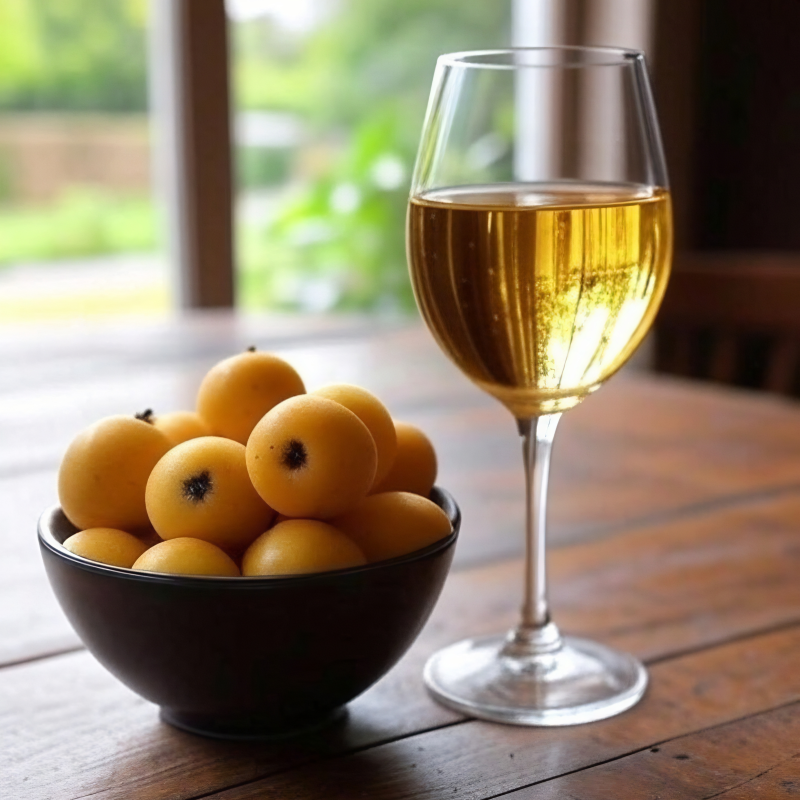
Some people call them Japanese (or Chinese) plums. Well, I can definitely say they are not the kind we pickle to make Umeboshi. The loquat tree makes clusters of yellow fruit which ripen pretty fast and are very delicate. That is probably why you won’t find them in very many markets. Fortunately they grow like mad in the San Lorenzo Valley. My tree came out of nowhere about thirty years ago and I had no idea what it was, but it wasn’t poison oak or scotch broom, so it got to stay. Then, sometime ago a traditional Chinese medicine practitioner friend of mine told me what they were and that they have been cultivated for at least a thousand years to treat all kinds of things including the miseries of coughs, colds, and even diabetes. They have a unique taste, kind of sweet and sort of tangy. They make outstanding jelly and jam. They also make a fantastic fruit wine and that’s what we’ll be making.
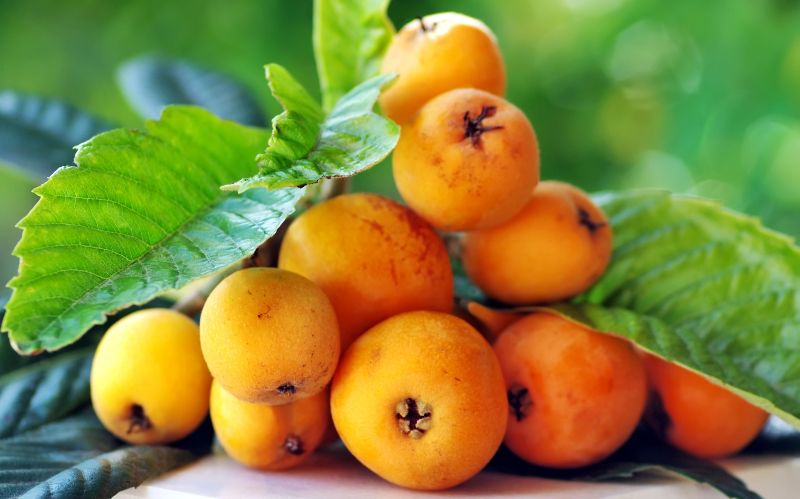
Loquats make a great summer wine. Makes tasty jellies and jams too!
Loquat wine has a flavor that is a little hard to describe. I think it is similar to pear but others have described it as being like apricots.
Working with the fruit can be a little frustrating, beyond having to wrestle them away from the squirrels. They have one or two giant seeds that get in the way of everything. When making jam, you have to remove the seeds but I’ve found that when making wine, deseeding hasn’t been necessary, we’ll be straining them out anyway.
It takes about five pounds of loquats and two pounds of sugar to make a gallon of wine. It also takes one half packet of wine yeast (I still like Lalvin EC 1118) and two tablespoons of lemon juice.
We also need the usual hardware: two 2-gallon pots, one 2-gallon primary fermenter with lid and airlock, a one gallon secondary fermenter (jug), a strainer with big holes, and one with small holes, a thermometer, a big slotted spoon and a potato masher and a big funnel, five screw top wine bottles and some good sanitizer like iodophor or Star-San.
Wash the loquat and either pop the seeds out or not and put them in one of the pots. Add half a gallon of water and on to medium high. Stir and smash for about 10 minutes or until it’s goopy. Put the big hole strainer over the other pot and add about five or 10 scoops of mush at a time and smash it through. Then pour the rest through. Add one gallon of water, the sugar and the lemon juice and boil for 10 minutes. Take it off the heat and cover with something to keep out the bugs and let it cool to about 90 degrees.
From this point forward, everything must be thoroughly sanitized. Pour it into the fermenter and stir it like mad to add a little air. Pour in the half packet of yeast and attach the lid and airlock. Place in a nice warm place and let it bubble for two weeks stirring daily (sanitized spoon please) for the first week. Carefully transfer it to the one gallon fermenter through the small hole strainer and put it away for a month or until it is completely done bubbling. Transfer it again to another jug if you like to strain off the sediment or just carefully pour it into the sanitized screw top bottles. Let them age for at least a couple months. I loosen and retighten the lids once in a while as I have been wrong about the fermentation completion. If you really can’t help yourself and have to try a little before its time, I’ll never tell. Loquat wine pairs well with seafood such as halibut with a lemon butter sauce or a lemon chicken dish.
Have a family recipe and photos to share? The team at the San Lorenzo Valley Post welcomes your Santa Cruz Mountains news, story ideas, photos, and letters. Send us an email.
Sign up for our newsletter to stay connected to news and events in the Santa Cruz Mountains.

Thomas Andersen
Tom Andersen is a writer, cook, martial arts instructor and lifelong Felton resident. He explores the world of fermented food and drinks in print and online. Tom lives in Felton with his family and many pets. He is currently working on a cookbook about fermentation.